
How Expensive Is Microsoft Purview? Why It Should Be Central to Your Fabric Strategy

In the era of AI and intelligent agents, can we really quantify the cost of Microsoft Purview? At first glance, it may seem expensive—until a data breach occurs. Then the cost of repairing reputational damage, regulatory fines, and customer trust easily outweighs what Purview would have cost over several years.

Data loss is real. So is insider risk. And in an age where data is both an asset and a liability, protecting your company-wide information is not a luxury—it’s a necessity.

Many organizations begin their Microsoft Fabric projects with strong technical ambitions but without the governance tools that make those ambitions sustainable. Fabric is powerful on its own, but some things simply work better together. Instead of adding Purview later as an afterthought, consider it part of your foundation from day one.

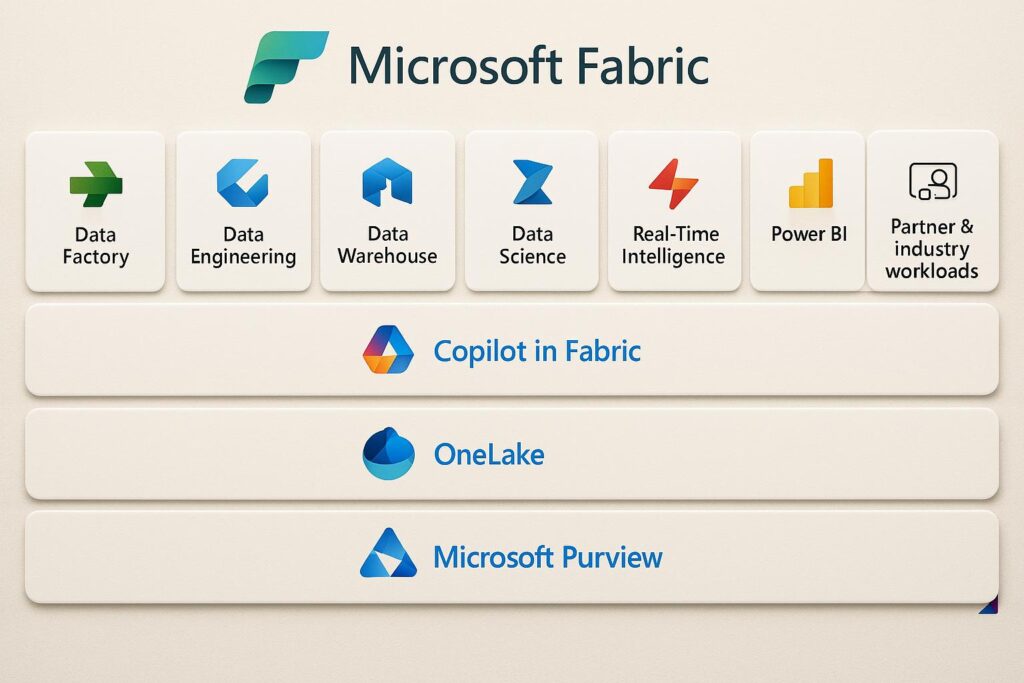
Fabric Architecture
Microsoft Fabric Architecture

Understanding Purview’s Cost Structure

Microsoft Purview pricing is usage-based and includes:

  • Data Map Storage: Cost per GB of metadata stored.
  • Scanning & Classification: Charges for scanning and applying data classification rules.
  • Insights & Access: Costs associated with compliance and access insights.

These costs are predictable and scalable—especially when compared to the hidden costs of poor governance.

Treating Purview as optional often leads to far greater expenses later on:

  • Retrofit Costs: Rebuilding pipelines, reclassifying data, and recreating lineage maps.
  • Compliance Risks: Missing key regulations like GDPR, HIPAA, or internal audit requirements.
  • Security Gaps: Sensitive data exposed to unauthorized users due to missing labels or policies.
  • Operational Inefficiencies: Teams wasting hours trying to locate trusted, certified data sources.

By the time these issues surface, the price of neglect usually exceeds what Purview would have cost in the first place.

Purview Pricing Models

Microsoft Purview offers two primary billing options depending on your environment and governance needs.

1. Per-User Licensing Model

Ideal for organizations using Microsoft 365 workloads.

  • Included with Microsoft 365 E5, A5, F5, and G5 licenses.
  • Governance and compliance features are bundled into the existing subscription.
  • No separate Purview cost for covered workloads.

 2. Pay-As-You-Go (PAYG) Model

For broader data governance scenarios, particularly when working beyond Microsoft 365.

  • Designed for non-Microsoft data sources, AI applications, and Fabric-connected assets.
  • Key pricing components include:
    • Governed Assets: Charged per unique asset per day.
    • Data Health Management: Billed per processing unit per run.
    • At-Rest Protection: Based on the number of protected assets.
    • AI Protection Meters (2025): New model supporting GenAI governance scenarios.

Example: If you attach three data assets to a single data product, you’re charged once per asset daily. If an asset is linked to both a data product and a critical data element, it’s only billed once.

Note: You’ll need an active Azure subscription to use PAYG features. Pricing varies by region, and the Azure Pricing Calculator can help estimate costs.

Why Purview Should Be Embedded in Your Fabric Project

  1. Cost Efficiency
    Early integration prevents costly retrofits and governance debt. You pay only for what you use and build security into your data lifecycle from the start.
  2. Unified Metadata Management
    Purview provides a single catalog for all your data—structured, unstructured, on-premises, and cloud. This unified view simplifies discovery, classification, and lineage tracking.
  3. Security & Compliance from Day One
    Sensitivity labels, access policies, and data loss prevention features secure information before it becomes a liability.
  4. Scalability
    As your Fabric environment expands, Purview scales with it—no need to re-architect. Onboard new domains, sources, and users effortlessly.
  5. Trust & Transparency
    Data lineage and classification foster organizational trust. Analysts know where data originates, and leaders can make decisions with confidence.

Real-World Scenario: Fabric Without Purview

Imagine launching a Fabric project with multiple domains, dataflows, and Power BI reports. Six months later, you realize:

  • Fabric’s built-in lineage shows dependencies within its own environment, but you can’t trace relationships across external systems.
  • Sensitive data is being shared without classification.
  • Compliance teams are raising red flags.
  • You now need to retrofit Purview across dozens of workspaces.

This is a common—and completely avoidable—situation. Whereas Fabric provides excellent in-platform lineage, Purview takes it further—linking metadata, sensitivity labels, and compliance policies across your entire data estate, including Azure, SQL, and external SaaS sources.

Conclusion: Governance Is Not Optional

Microsoft Purview is more than a compliance tool—it’s the backbone of responsible data innovation. Integrated with Microsoft Fabric, it empowers organizations to achieve:

  • Secure, scalable analytics
  • Trustworthy insights
  • Regulatory compliance
  • Operational efficiency

By embedding Purview from the start, you future-proof your data environment, reduce long-term costs, and build lasting trust in your data ecosystem.

middle belt blog

Related Post