
Speed vs Efficiency in Microsoft Fabric: Materialized Lake Views vs Query Folding
When building modern analytics solutions in Microsoft Fabric, performance is not just about having powerful tools—it’s about knowing where and how to optimize.
Two common concepts that often come up in Fabric architecture are:
-
Materialized Lake Views
-
Query Folding
They sound similar, but they solve different problems. Understanding the difference can help you build a faster, more scalable analytics platform.
What is Query Folding?
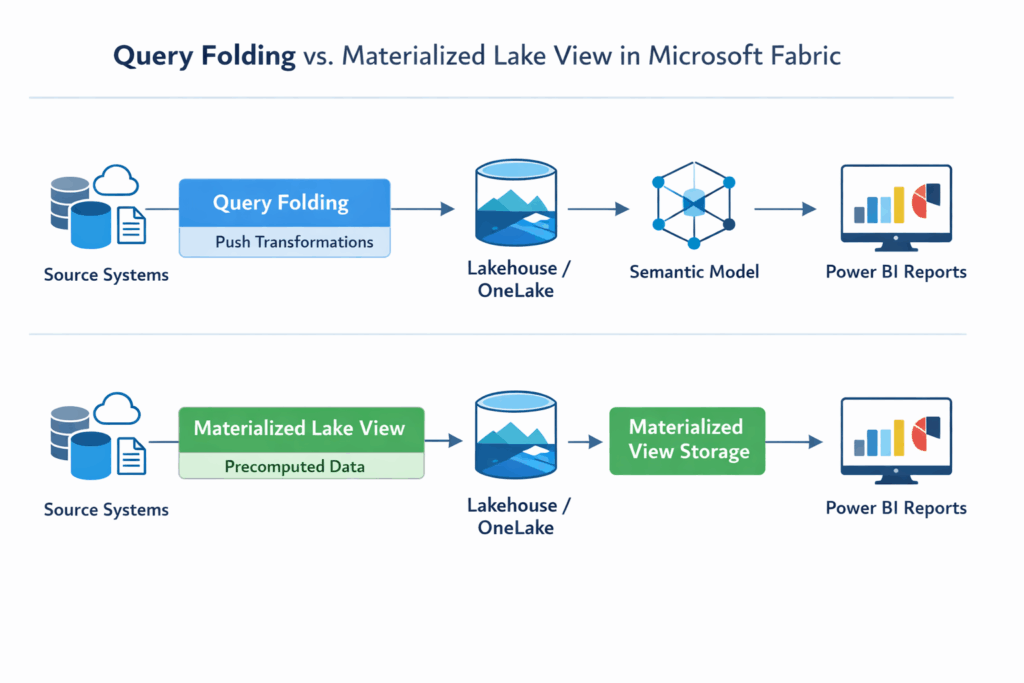
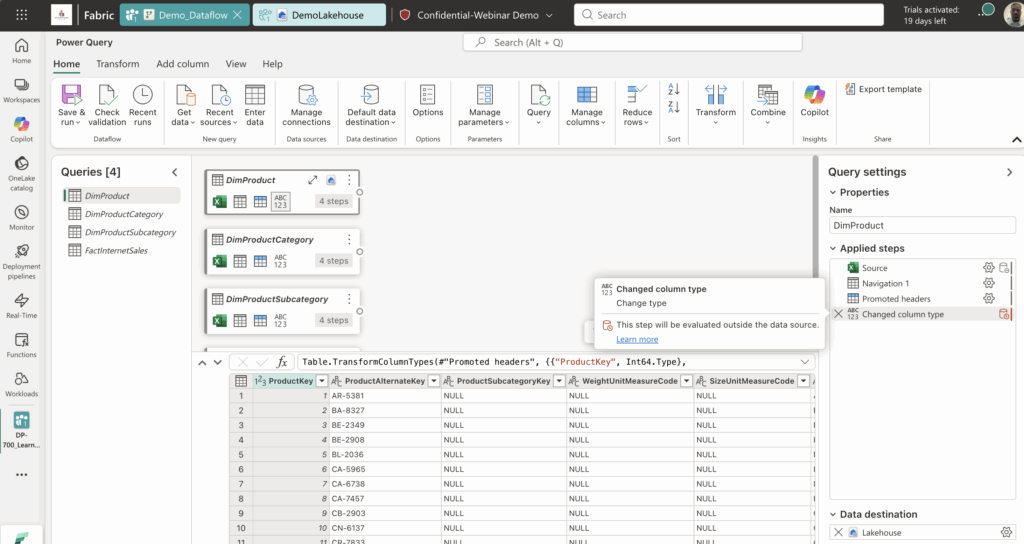
Query Folding means that the transformations you apply during data preparation are “pushed back” to the source system.
Instead of Fabric doing the heavy lifting after the data is loaded, the source system (such as SQL Server, Azure SQL, Synapse, etc.) performs the filtering, grouping, and shaping before the data lands in Fabric.
Think of it like this:
You’re ordering food from a restaurant.
Rather than buying raw ingredients and cooking at home, you ask the restaurant to prepare everything—then deliver it ready.
Why Query Folding matters:
- Faster ingestion and refresh times
- Less workload on Fabric compute
- More efficient pipelines and dataflows
- Better handling of large datasets
Best use case: When you want to optimize data loading and reduce transformation costs.
What is a Materialized Lake View?
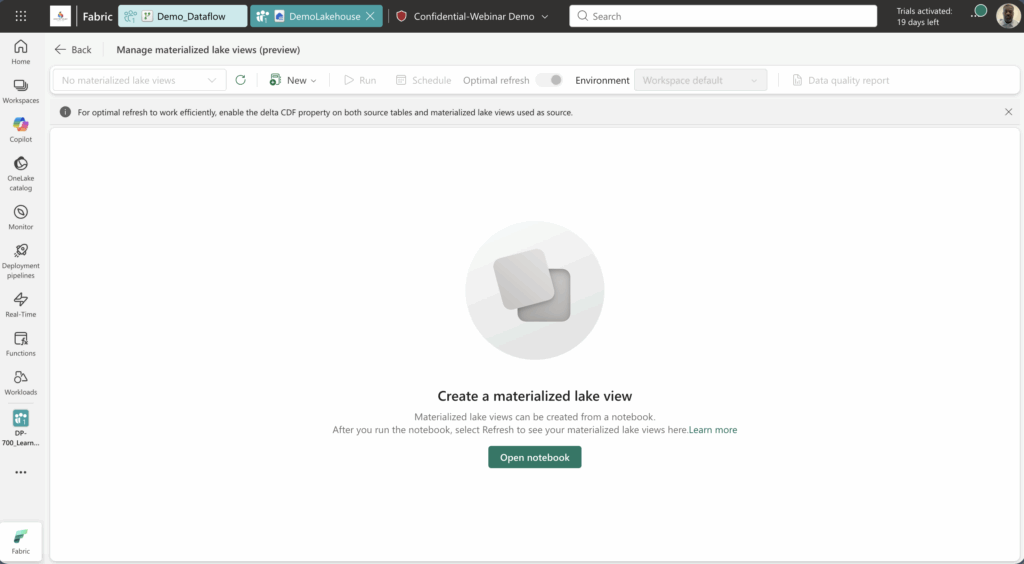
A Materialized Lake View is a precomputed version of a query result that is stored inside OneLake.
Instead of calculating complex logic every time a report or user asks for data, Fabric can simply retrieve the precomputed results.
Think of it like this:
You cooked a meal once and stored it in the fridge.
When you want it again, you don’t cook from scratch—you simply reheat it.
Why Materialized Lake Views matter:
- Faster query performance
- Ideal for repeated queries
- Reduces compute load at report time
- Great for complex joins and aggregations
Best use case: When the same complex data is accessed frequently or performance needs to be extremely fast.
The Core Difference (Simple Explanation)
Here’s the easiest way to remember it:
Query Folding improves efficiency during ingestion (loading and transforming data)
Materialized Lake Views improve speed during consumption (querying and reporting)
In other words:
- Query Folding = efficient preparation
- Materialized Lake Views = fast access
When Should You Use Each One?
Use Query Folding when:
Your data source supports folding
You want faster refresh and ingestion
You need to minimize transformation compute inside Fabric
You’re working with large volumes of raw source data
Use Materialized Lake Views when:
Reporting is slow because queries are complex
The same logic is reused frequently
Many users access the same data daily
You need strong performance for dashboards and semantic models
The Best Strategy: Use Both
The real advantage happens when you combine them:
Use Query Folding to push transformations upstream and reduce ingestion cost
Use Materialized Lake Views to precompute expensive queries and accelerate reporting
Together, they form a strong performance-first data strategy for scalable analytics in Microsoft Fabric.
Final Thoughts
Fabric gives organizations a powerful platform—but performance depends on smart design choices.
If you optimize ingestion through query folding and speed up analytics using materialized lake views, you build a solution that is:
- Faster
- Cheaper
- More scalable
- Easier to maintain

